DNA?DNA?
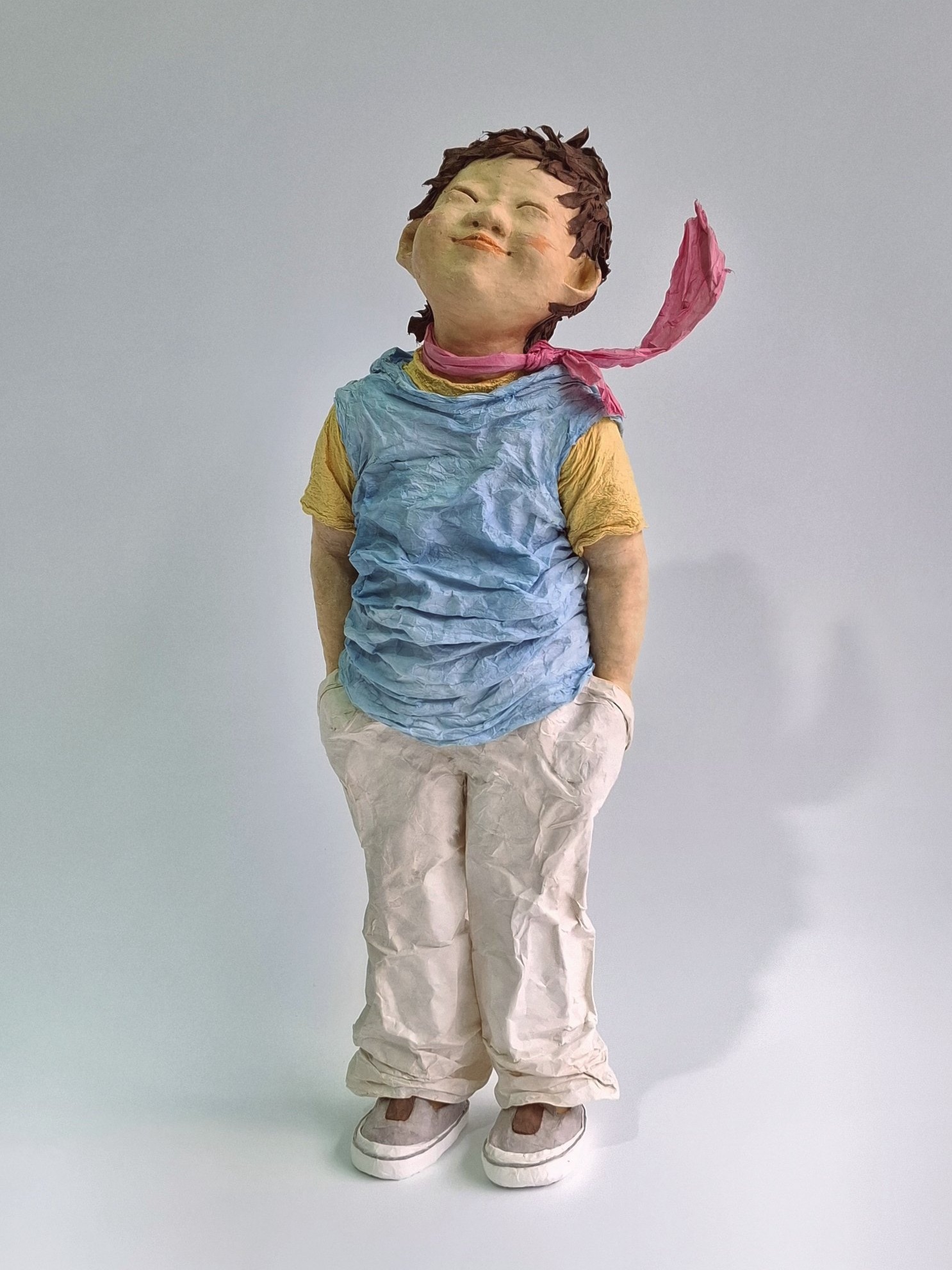
「DNA?」는 바지 주머니에 두 손을 푹 찔러 넣고 턱을 살짝 치켜든 채 눈을 감고 웃는 한 소년을 담은 작품입니다. 목에 두른 분홍 스카프가 바람에 휘날리고, 소년은 그 바람을 온몸으로 즐기듯 서 있습니다.
하늘색 민소매 위에 노란 티셔츠를 겹쳐 입고, 헐렁한 바지에 운동화를 신은 차림. 닥종이를 구기고 겹쳐 만든 옷의 주름은 소년의 자유로운 기분처럼 경쾌하게 흐릅니다.
이 작품의 제목에는 특별한 이야기가 담겨 있습니다. 작품을 본 선생님이 "너를 똑 닮았다"며 한 번의 망설임도 없이 단번에 지어 주신 이름이지요. 그래서 제목 끝에는 작가의 웃음 섞인 물음표가 붙었습니다.
작품은 정말 작가를 닮을까요? 손끝으로 한 겹 한 겹 종이를 덧입히는 동안 작가의 마음과 표정이 조금씩 스며든 것은 아닐까요. 소년의 능청스러운 미소 앞에서 관람객도 저절로 웃음 짓게 됩니다.
DNA? shows a boy with both hands thrust deep into his trouser pockets, chin tilted slightly up, smiling with his eyes closed. The pink scarf around his neck streams in the wind, and he stands as if enjoying that wind with his whole body.
A yellow T-shirt layered over a sky-blue vest, baggy trousers and sneakers. The folds of his clothes, made by crumpling and layering dakjongi, flow lightly, just like the boy's carefree mood.
The title of this work has a special story. On seeing it, the artist's teacher said, "He looks just like you," and named it on the spot without a moment's hesitation. That is why the title ends with the artist's laughing question mark.
Do works really come to resemble their makers? Perhaps, as layer after layer of paper was added by hand, a little of the artist's heart and expression seeped in. Before the boy's cheeky smile, viewers find themselves smiling too.
A boy with his hands in his pockets and a scarf in the wind, smiling with eyes closed — said to look just like the artist.
당신을 똑 닮은 것은 무엇인가요?What looks just like you?
휘날리는 스카프는 정지된 작품에 바람과 움직임을 불어넣고, 소년의 자유로운 기분을 보여 줍니다.
주머니에 손을 넣고 턱을 치켜든 자세에서 세상 걱정 없는 능청스러움과 자신감을 느껴 보세요.
닥종이를 구기고 겹쳐 표현한 옷자락의 주름이 소년의 경쾌한 리듬을 만들어 냅니다.
선생님이 "너를 똑 닮았다"며 단번에 지어 준 제목. 작품은 정말 작가를 닮는 것일까요?
작품 앞에서 누군가 나를 보고 "너 같다"고 웃어 주던 순간, 나를 꼭 닮은 무언가를 떠올려 보세요.
The streaming scarf breathes wind and movement into a still sculpture, and shows the boy's carefree mood.
Feel the easy, untroubled confidence in his pose — hands in his pockets, chin raised.
The folds of his clothes, made by crumpling and layering dakjongi, give the boy a light, lively rhythm.
A title given in an instant: "He looks just like you." Do works really resemble their makers?
Recall a moment when someone laughed and said "That's so you," and something that looks just like you.
선생님이 지어 준 제목 이야기를 담은, 휘파람과 우쿨렐레의 경쾌한 노래입니다.A breezy song of whistling and ukulele, telling the story of the title the teacher gave.
주머니에 두 손 푹 찔러 넣고
턱은 살짝 하늘로 치켜든 채
분홍 스카프가 바람에 날리면
눈 감고 혼자서 씩 웃는 아이
선생님이 보자마자
망설임도 없이 하신 말
DNA? 너를 똑 닮았대
고집스런 저 턱 끝도 똑같대
웃음이 먼저 터진 그 이름
나를 똑 닮은 아이래
정말 그런가 거울 앞에 서서
턱을 들고 눈을 감아 봤어
바람 부는 쪽으로 고개 돌리면
어쩐지 나도 모르게 웃음이 나
종이를 한 겹 두 겹
덧입힐 때마다 스며든 걸까
DNA? 손끝이 닮았대
조물조물 빚은 마음이 닮았대
밤새 접고 붙인 시간만큼
내가 너에게 담겼대
작품은 작가를 닮는다지
그렇다면 참 다행이야
이렇게 해맑게 웃는 너라면
나도 그런 사람이고 싶어
DNA? 우리 똑 닮았지
바람 앞에 씩 웃는 그 얼굴도
누가 뭐래도 괜찮은 그 마음
나를 똑 닮은 아이야
똑 닮았대
정말 그런가 봐
나를 똑 닮다.
선생님이 "너를 똑 닮았다"며 한 번의 망설임도 없이 단번에 지어 주신, 웃음을 자아내는 제목이었습니다. 작품은 정말 작가를 닮을까요?
처음엔 쑥스러워 웃어넘겼지만, 작품을 다시 바라볼수록 고개가 끄덕여졌습니다. 바람 앞에서 눈을 감고 씩 웃는 표정, 주머니에 손을 넣고 괜히 턱을 드는 모습에 어린 날의 제가 보였거든요.
닥종이를 한 겹 한 겹 덧입히는 시간 동안 손끝을 따라 마음도 함께 스며드는 것 같습니다. 그래서 인형들은 저마다 조금씩 저를 닮아 가는지도 모르겠습니다.
이 작품 앞에서 여러분을 꼭 닮은 무언가를 떠올려 보시기 바랍니다. 그리고 그것을 바라보며 웃던 누군가의 얼굴도 함께요.
Just like me.
It was a title that made everyone laugh — my teacher said, "He looks just like you," and named it at once, without a moment's hesitation. Do works really resemble their makers?
At first I laughed it off in embarrassment, but the longer I looked at the work, the more I found myself nodding. In the face grinning into the wind with closed eyes, and the chin raised for no reason with hands in the pockets, I could see myself as a child.
During the long hours of adding dakjongi layer by layer, it feels as though my heart seeps in along with my fingertips. Perhaps that is why each doll comes to resemble me a little.
I hope you will think of something that looks just like you in front of this work — and of the face of someone who smiled as they looked at it.